
Resale Condo Interior Design in Singapore: Renovating an Older Unit (2026)
KEY TAKEAWAYS
The catch most first-time condo owners miss: you don’t own everything you see. Facade, windows, aircon ledges and often wet-area waterproofing are common property.
A resale condo is governed by your MCST and the BMSMA — not HDB. Expect a renovation deposit, by-laws and permitted hours.
Within your strata lot, you generally have considerable freedom to change layouts and finishes, but works remain subject to MCST by-laws and any applicable BCA, URA or other regulatory requirements.
Older units reward spending on the invisible: wiring, plumbing and waterproofing before finishes.
Indicative 2026 cost: S$50–90k mid-range, S$90–150k+ high-end.
Just Bought a Resale Condo in Singapore? Here’s Everything You Need to Know
A resale condo gives you what a new launch often can’t:
Larger floor plates
A mature estate
Established landscaping
And real character.
But it also hands you dated layouts, tired finishes, and a rulebook that often catches first-time condo owners off guard. The big one: you don’t fully own everything you can see. The facade, the windows, the external aircon ledge and often the original wet-area waterproofing are common property under your MCST. Change them without approval, and you’ll be reinstating at your own cost. Surprising, Right?
This blog is here to help out; it covers what you can and can’t touch, the high-impact moves, styles, and what it costs to bring an older unit up to date.
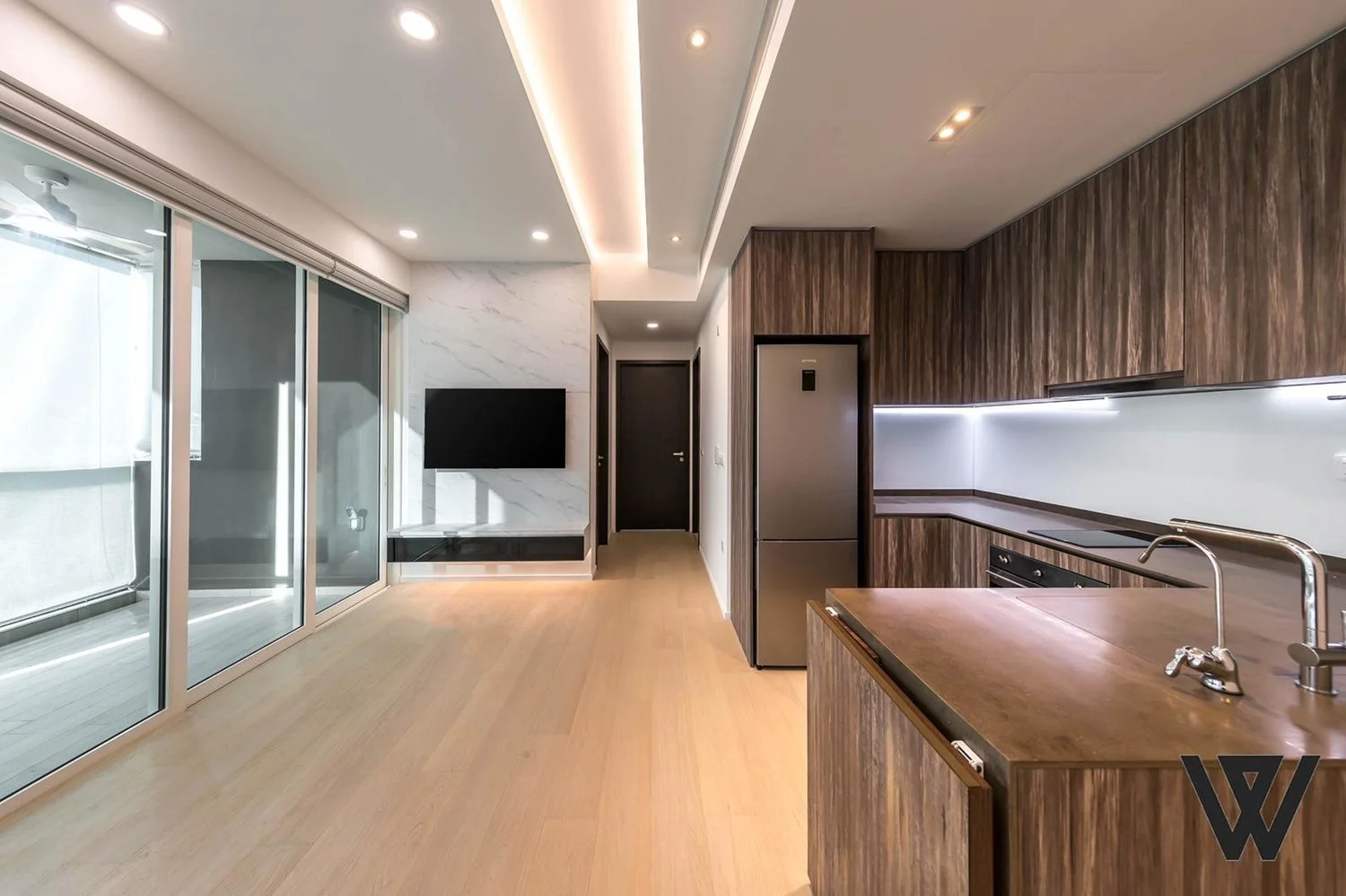
Principal Garden 2 Bedder, Condominium
Design Ideas for Resale Condo in 2026
An older condo does not need to look like a brand-new launch unit. Some of the best renovations use the existing proportions and character of the apartment, then remove the dated elements around them.
Modern Luxe
Modern luxe works particularly well when the condo has generous visual space for materials to breathe. Elements such as natural stone or stone-look surfaces, warm timber, and restrained metal finishes are quite popular in Singaporean homes built around the Modern Luxe theme. You can also add integrated lighting and carefully proportioned furniture to make everything feel posh yet put together.
The important part is restraint. One strong stone feature and well-executed joinery will usually look more sophisticated than several competing feature walls.
Japandi
Japandi suits older condos where the objective is to make the home feel lighter and calmer. Materials such as Warm timber, soft neutrals, simple furniture and concealed storage can soften compartmentalised layouts without making the space feel cold.
The style is also practical for resale homes because it does not rely heavily on decorative features that can date quickly. Look at 216 Bishan Street 23 for inspiration.
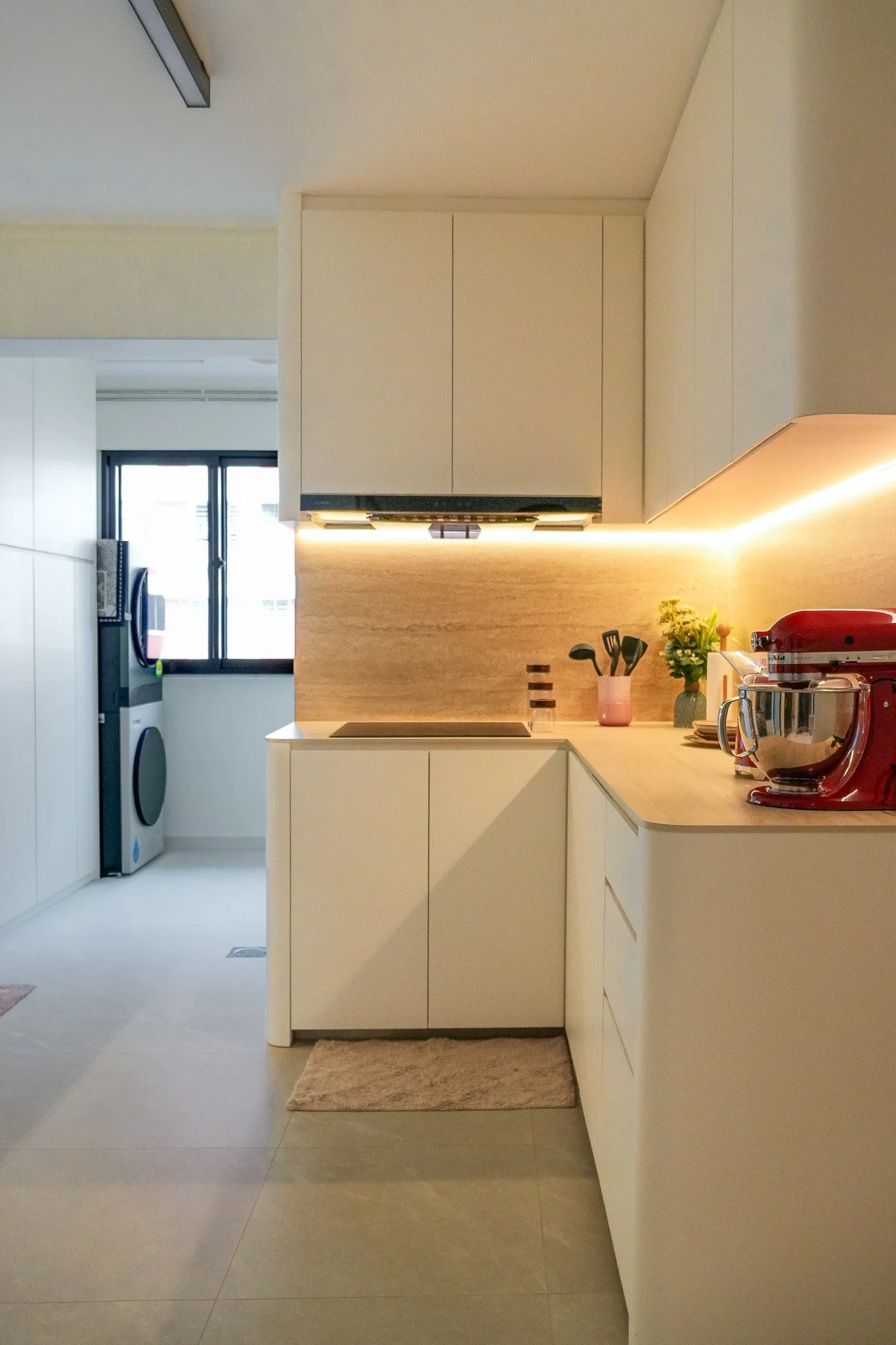
Warm Minimalism
Warm minimalism keeps the clean lines of a contemporary interior but uses enough timber, texture and softer lighting to make the home feel lived in. This works particularly well when you want to preserve a sense of spaciousness. Full-height joinery can hide everyday clutter while keeping the overall palette consistent.
If you are planning to follow warm minimalism in your next renovation, you can use Blk 556 Yishun Ave 6 Lilydale, Condominium as your muse.

Hotel- or Resort-Inspired
A hotel-inspired scheme can suit condos with larger bedrooms, generous bathrooms or substantial balconies. Layered lighting, upholstered furniture, stone surfaces and carefully selected hardware can create a more relaxed, hospitality-inspired atmosphere.
The trick is to borrow the feeling rather than reproduce a hotel room. The home still needs practical storage, comfortable furniture and spaces that work for everyday life.
Contemporary Classic
Not every older condo needs to be stripped of its character. If the existing proportions, parquet flooring or architectural details have potential, a contemporary-classic approach can retain some of that character while updating the kitchen, bathrooms, lighting and joinery. This is exactly what we did in 6 Kensington Park.
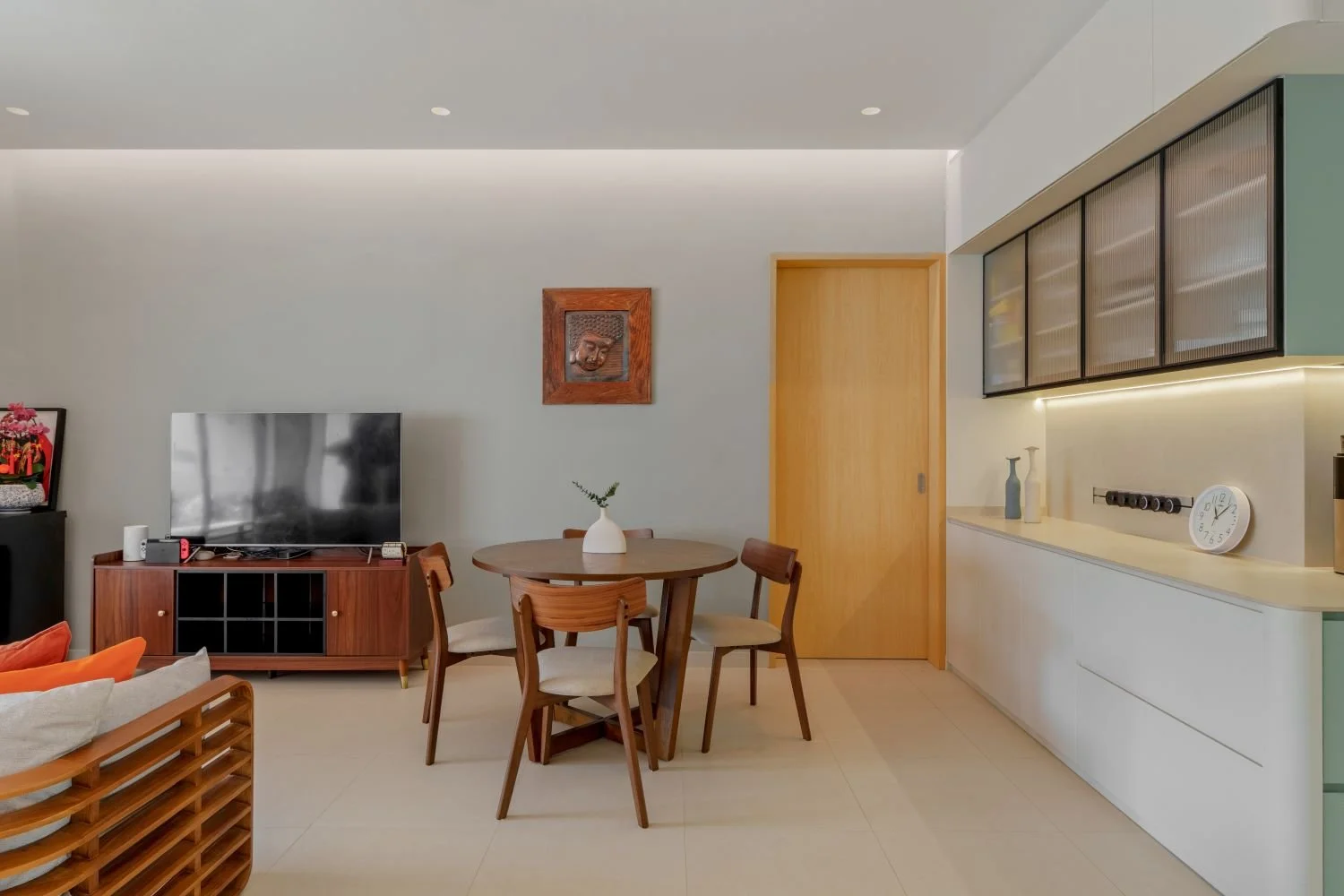
Whichever direction you choose, consistency matters more than following a trend. A resale condo feels more considered when the same small family of colours, materials and finishes carries through the home.
Real Resale Condo Projects by Swiss Interior
The best way to understand a resale-condo renovation is to see how different layouts and building ages respond to different design decisions. Swiss Interior has worked on resale condos across a range of unit types, from compact two-bedroom apartments to larger homes with more complex layouts.
Alps Residences
This project is a useful inspiration for a smaller resale condo, where every layout decision has to earn its space. Look at how the living areas, storage and material palette are coordinated rather than treated as separate design problems.

Blk 113 Tampines Street 86 Alps Residences, 2 Bedder Condominium
Lilydale
Lilydale provides an example of how a warmer, more minimal design direction can update an older condo without relying on excessive decorative detailing. The project is a great inspiration point if you are considering timber, neutral finishes and integrated storage.

Blk 556 Yishun Ave 6 Lilydale, Condominium
Sophia Hills
This project gives you another approach to a resale condo. As you can see, here we have worked with a more distinctive layout and used the design to reconnect the home's different spaces.

Mount Sophia, Sophia Hills, Condominium
You can browse the full Swiss Interior portfolio for more examples of how different condo layouts, sizes and styles can be approached.
7 Things to Check Before a Resale Condo Renovation
In an older condo, you do not start by choosing tiles and paint colours. Before the first hacking quotation is signed, establish what the building allows and what condition the existing unit is actually in.
1. Get the MCST renovation guidelines
Ask your contractor for the latest renovation guidelines and application requirements. These should tell you what documentation is needed, permitted working hours, restrictions on hacking and noisy works, debris disposal requirements, lift protection and the renovation deposit.
2. Check what needs approval
Not every renovation item is treated the same way. Your MCST may require approval for hacking, wet-area works, electrical works, changes to air-conditioning systems and other alterations. Ask before work begins rather than assuming an internal change automatically falls outside the rules.
3. Review the strata title plan
Don't rely on what looks like part of your apartment. The strata title plan and the development's management documents help establish what forms part of your strata lot and what is common property. This matters particularly for windows, external walls, air-conditioning components and other elements connected to the building exterior.
4. Confirm which walls and elements are structural
Before removing a wall, have the proposed works assessed by an appropriately qualified professional. Columns, beams, slabs and other structural elements are not ordinary renovation items, and structural work may require additional assessment and approvals.
5. Inspect the hidden services
Older condos can look perfectly liveable while concealing ageing electrical wiring, plumbing, pipework or air-conditioning systems.
Check these before buying expensive finishes. It is far easier to replace an ageing service while walls and floors are already open than after the renovation is complete.
6. Check wet areas carefully
Bathrooms deserve particular attention because the condition of the existing substrate and waterproofing can affect what you can safely do.
If you are changing the bathroom substantially, keep the MCST's requirements in mind and have the existing condition assessed before deciding whether to overlay, retile or rebuild.
7. Build approvals into the renovation programme
MCST approval should be part of the renovation timeline, not something added at the end. Allow time for drawings, submissions, revisions and deposits before booking contractors or ordering materials with long lead times.
The basic rule is simple: understand the building before designing the renovation. It can save you from paying twice for work that has to be altered or reinstated later.
What You Can and Can’t Change in a Resale Condo
Within your strata lot, you generally have considerable freedom to change layouts and finishes, but works remain subject to MCST by-laws and any applicable BCA, URA or other regulatory requirements. You also cannot simply alter common property or building elements outside your control.
This is one of the biggest differences from an HDB renovation, and getting the rules right early can save you from expensive reinstatement work later.
Condos are governed by the Building Maintenance and Strata Management Act (BMSMA) and your MCST’s by-laws rather than by HDB.
In practice, that means submitting a renovation application to the managing agent, paying a renovation deposit, and working within permitted hours and debris rules.
Removing non-structural walls to open a boxed-in layout is usually fine with approval; structural walls, columns and beams are not — have your contractor confirm what’s structural.
Anything that touches the facade, windows or external ledges, and some wet-area works, can also need URA planning permission and must respect the building’s waterproofing. When in doubt, the managing agent and a licensed professional are your reference points, not the neighbour’s renovation.
5 Hacks For a Resale Condo Renovation
The changes that transform an older condo most are opening up the kitchen, combining or reproportioning rooms, overlaying flooring, and refreshing tired bathrooms. None of them needs you to touch the structure.

Blk 113 Tampines Street 86 Alps Residences, 2 Bedder Condominium
Let’s discuss 5 hacks we always use during our condo renovation projects
Open the kitchen — removing a non-structural wall between the kitchen and living reconnects the unit and pulls light through it.
Reproportion rooms — older condos over-compartmentalise; merging a small study into the living area or enlarging a cramped master pays off daily.
Overlay flooring — large-format tile or engineered timber over sound existing floors modernises instantly and avoids heavy hacking.
Lift the bathrooms — new vanities, sanitaryware and tiling, keeping within the existing waterproofing and wet-area footprint where possible.
Use the balcony — treat it as a living extension with weather-durable finishes; just keep any changes within MCST and facade rules.
Cost and Timeline for a Resale Condo Renovation
Expect roughly S$50,000–90,000 for a mid-range resale condo renovation and S$90,000–150,000 or more for an extensive high-end transformation in 2026, plus the MCST renovation deposit.
Older units cost more when dated wiring, plumbing and waterproofing need replacing. Do not go cheap on these things because it is the invisible work that protects everything you put on top.
The biggest cost drivers usually include:
Hacking and disposal: Extensive demolition means more labour, debris and protection of common areas.
Carpentry: Full-height wardrobes, kitchen cabinetry, TV consoles and custom storage can become one of the largest parts of the budget.
Kitchen renovation: Cabinetry, countertops, appliances, plumbing changes and electrical work all affect the final figure.
Bathrooms: Retiling, sanitaryware, vanity works, plumbing and wet-area treatment can add up quickly.
Electrical works: Older units may need additional points, rewiring or upgrades to support a modern appliance load.
Plumbing: Ageing pipes or changes to the kitchen and bathroom layout can require additional work behind the finishes.
Flooring: Full replacement generally costs more than overlaying sound existing floors.
Lighting: A layered lighting scheme requires more planning, electrical points and concealed work than a simple ceiling-light arrangement.
Premium finishes: Natural stone, large-format surfaces, specialised hardware and higher-end fittings can push the budget upward.
This is also why two resale condos with the same floor areas can have two completely different renovation budgets. Discuss your plans with your contractor before you begin the hacking and renovation so you can have an idea about the costs.
Timelines usually run 10 to 16 weeks depending on scope, and can be affected by MCST approval, permitted working hours, and lead times on stone and joinery. Build the approval step into your schedule from day one rather than treating it as a formality.
Renovate Your Resale Condo With Swiss Interior
A resale condo rewards owners who learn the rulebook first: know what’s yours to change, clear it with the MCST, spend on the invisible work, then design freely inside your walls. If you’d like that mapped out for your unit, Swiss Interior renovates resale condos across Singapore with amazing design ideas and styles. Contact us today for a quotation.
Frequently asked questions
What can and can't you change in a resale condo?
You can change almost anything inside your strata lot — layout, non-structural walls, kitchen, bathrooms, flooring and finishes — with MCST approval. You cannot alter common property, which usually includes the facade, windows, external aircon ledges, the main structure and often the original waterproofing membrane in wet areas. Structural walls can never be hacked.
Do I need MCST approval to renovate a condo?
Yes. Condos are governed by the Building Maintenance and Strata Management Act (BMSMA) and your MCST's by-laws. Before works begin, you typically submit a renovation application to the managing agent, pay a renovation deposit, and follow permitted working hours. External changes and some wet-area works may also need URA planning permission and a Qualified Person.
How much does it cost to renovate a resale condo in Singapore in 2026?
As an indicative 2026 guide, a resale condo renovation commonly runs S$50,000–90,000 for a mid-range refresh-and-reconfigure and S$90,000–150,000 or more for an extensive, high-end transformation. Older units cost more when dated wiring, plumbing and waterproofing need replacing.
Is renovating a resale condo different from an HDB?
Yes. Instead of HDB rules and its Directory of Renovation Contractors, a condo is governed by your MCST and the BMSMA, with a renovation deposit and by-laws on hours, debris and common property. You generally have more layout freedom inside the unit but stricter limits on anything external.
Can I hack walls to open up a resale condo layout?
Non-structural walls can usually be removed with MCST approval to open up dated, boxed-in layouts. Structural walls, columns and beams cannot be touched. A Qualified Person should confirm what is structural, and any change affecting waterproofing or the facade needs approval.
What are the best styles for a resale condo in 2026?
Modern luxe, hotel- or resort-inspired schemes, Japandi and warm minimalism suit resale condos well, using natural stone, timber, integrated lighting and full-height joinery to lift dated units into calm, elevated spaces.