
Muji Interior Design in Singapore: The Complete 2026 Guide
What Muji style is, how it differs from Japandi and Scandinavian, and how to get the look room by room in a Singapore home.
If you've ever walked into a Muji store and felt your shoulders drop, you already understand the appeal of Muji interior design. The Japanese brand built its whole identity on quiet, well-made, no-logo things that just work, and that philosophy translates beautifully into a home. In a city as fast and crowded as Singapore, a flat that feels calm and orderly the moment you step in is worth a lot.
This guide covers what Muji style actually is, how it differs from the Japandi and Scandinavian looks it gets confused with, and how to bring it into your own home one room at a time. Most of the examples lean toward HDB flats and condos, because that's where the style does its best work.
What does Muji mean?
The word Muji is derived from the word Mujirushi Ryōhin which translates to “no brand quality goods”. The Muji philosophy focuses on careful selection of natural materials and colors that provide calmness, serenity, relaxation, tranquility, and functionality in any space.
What is Muji Interior Design?

BLK 603B Senja Road 4-Room Resale
Muji style takes the brand's design language and applies it to a whole home: simplicity, function, natural materials and almost no fuss at all. There's no branding on show, no loud colour, no decorative object that isn't also useful.
What you get instead is a pared-back space built around light wood, soft neutral tones and clever, mostly hidden storage. It's minimalism, but a warm and very liveable version of it rather than a cold gallery.
The thing that defines a real Muji home is intentional simplicity. Every item has a reason to be there, surfaces stay clear, and the few things on display tend to be natural: a ceramic bowl, a linen throw, a single plant. The result is a home that feels restful and uncomplicated, which is exactly what the style sets out to do.
What are the Core Principles of Muji?
If you strip Muji style down, you will get to see a handful of ideas do all the work:
Natural materials. Light wood, linen, cotton, rattan and ceramic, used honestly and left close to their natural state.
A neutral, restful palette. White, beige, soft grey and the warm tone of pale wood, with very little contrast and no bold colour.
Function first. Furniture is streamlined and practical. If a piece can do two jobs or fold away, even better.
Clutter hidden, not displayed. Generous, low-key storage keeps surfaces clear, which is the secret to the calm.
Quiet over loud. No statement pieces shouting for attention. The whole room is the statement.
Muji vs Japandi: What's the Difference?
This is the question that brings most people to the topic, because the two styles look a lot like each other. At a glance, both give you light wood, uncluttered space and a neutral palette. Dig a little deeper, and the difference is one of mood.
Muji's interior design is all about everyday livability, soft beige curtains, pale wood floors, neat baskets tucked away, with a lived-in quality that invites you to exhale.
Japandi, on the other hand, takes that same minimalist base and adds more contrast and soul. It blends Japanese wabi-sabi with Scandinavian hygge, so you'll see darker grounding accents (a black timber, a charcoal textile), richer textures and a slightly more curated, designed feel.
Put simply: Muji is the calm, functional everyday version, and Japandi is the warmer, more layered, more intentional one.
Muji vs Scandinavian
This is another common mix-up. Both value simplicity and natural light, but Scandinavian design is brighter and cosier, with whiter walls, the occasional playful accent colour, and chunkier textures like wool throws and sheepskins.
Muji is stricter and more muted: cooler, calmer neutrals, less decoration, and a stronger emphasis on hidden storage and function over warmth for warmth's sake. Scandinavian wants to feel hygge-cosy; Muji wants to feel clear and unbothered.
Muji Room-by-Room Design Ideas
Muji Living Room
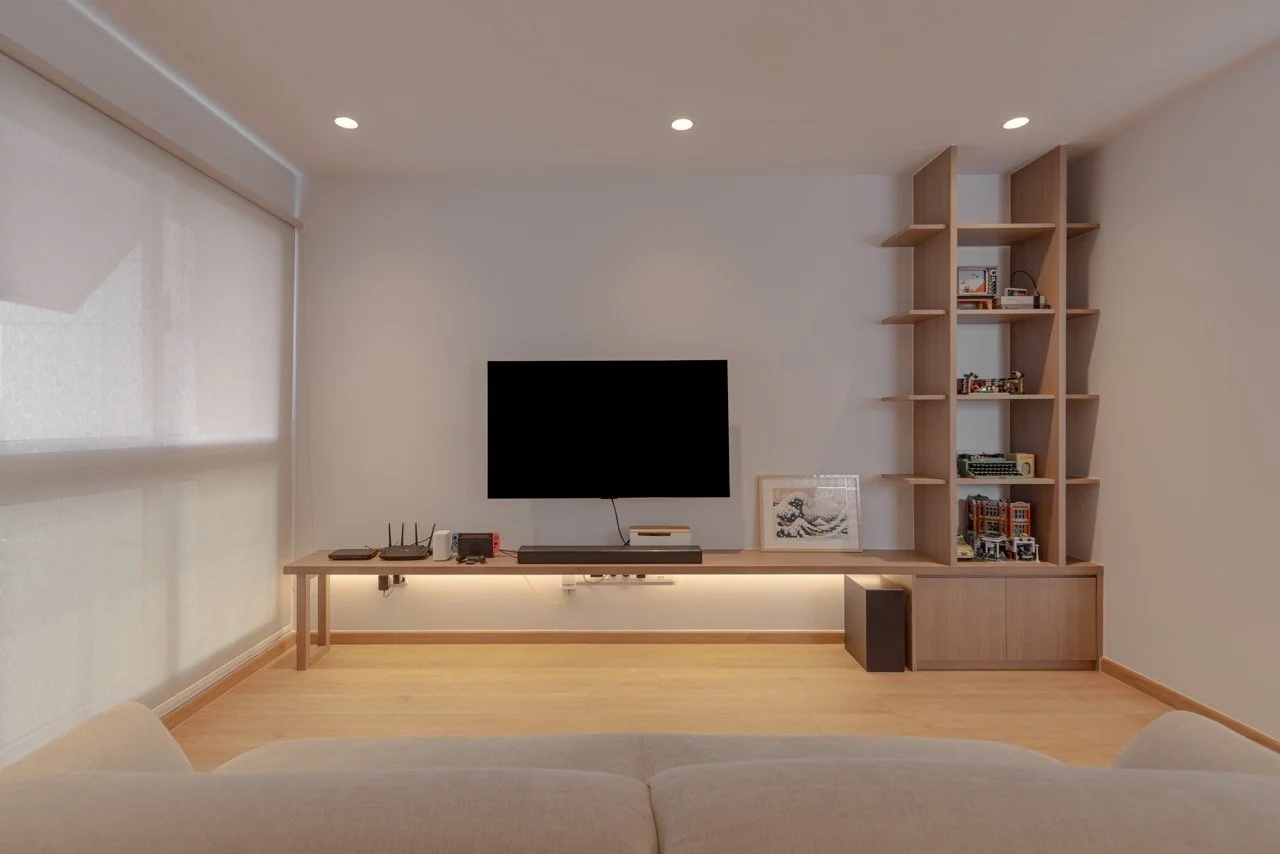
181 Bedok North - 4 Room HDB Resale
Start with a low, simple sofa in a neutral fabric and build outward from there. Keep the coffee table light and uncluttered, lean on pale wood for the TV console and shelving, and resist the urge to fill every surface. A single plant, a stack of two or three books, a woven basket for the things that would otherwise pile up. The lighting should be warm and soft rather than bright and even, which is what gives a Muji room its quiet, end-of-day feel.
Muji Bedroom

Blk 271 Toh Guan Road - 4 room hdb resale
The bedroom is where Muji style feels most natural, because a bedroom should be restful anyway. A low platform bed, linen or cotton bedding, and a pale wood side table are essentially the whole recipe.
You can also add a handleless wardrobe and built-in so it recedes into the wall, and keep the walls and textiles within the same tone. The calmer and more consistent the palette, the better you'll sleep, or at least it'll feel that way.
Muji Kitchen and Dining
In the kitchen, Muji means flat, handleless cabinet fronts in a matte neutral, clear countertops, and storage sized so nothing has to live on display. A light wood dining table with simple chairs anchors the eating area.
The look is clean and practical, which happens to suit the way most Singapore kitchens are used. The trick, as everywhere in Muji, is discipline: a place for everything, and the willingness to actually put things away.
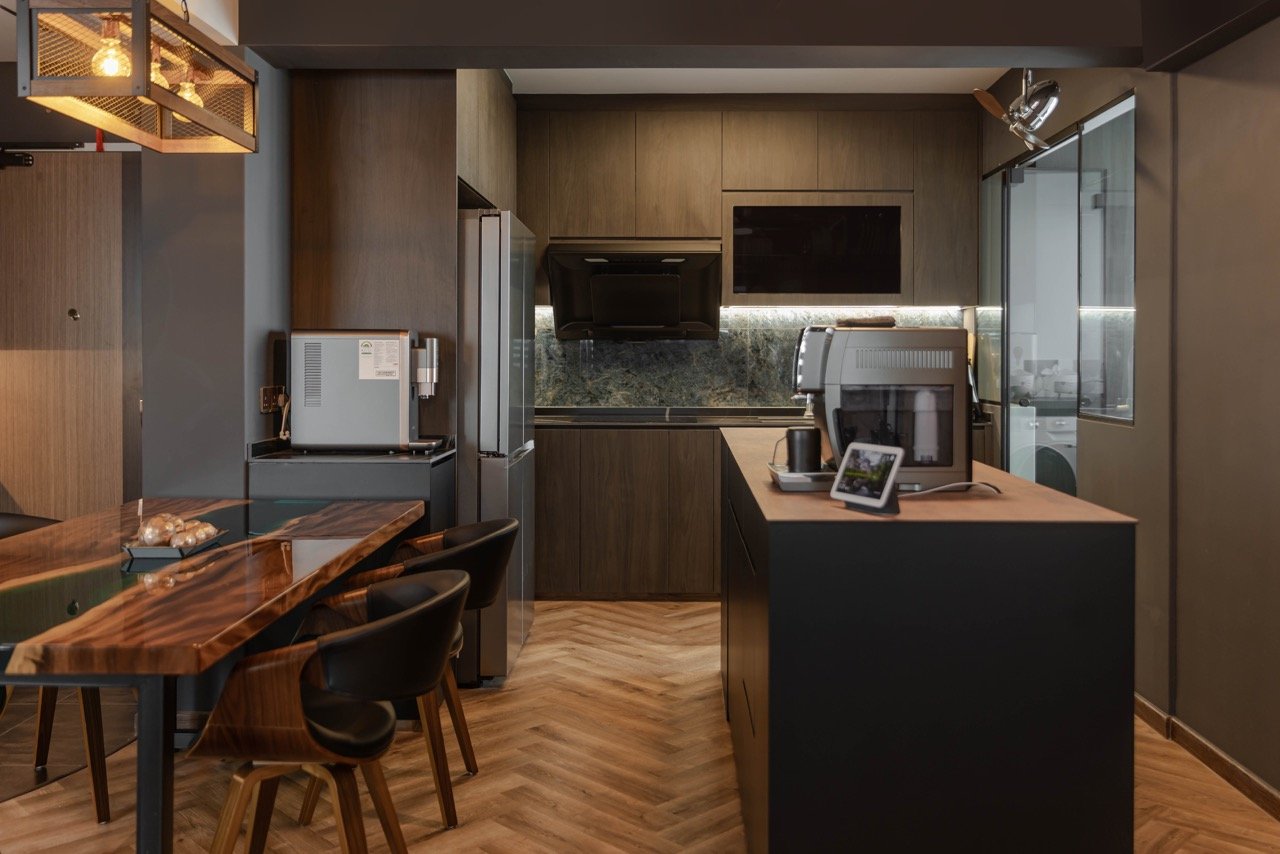
161B Jln Teck Whye - 4 Room BTO
Muji Interior Design Style on a Budget (and in a small HDB)
Good news: Muji is one of the kinder styles on the wallet, because its whole point is buying less and choosing well. You don't need exotic materials or statement furniture. What you need is restraint and storage. Invest first in built-in, handleless storage so your surfaces can stay clear, because that single move does more for the Muji feel than any amount of decor. Then keep the palette tight, add warmth through light wood and linen, and stop before the room feels full. In a compact BTO or resale flat, this approach also makes the space feel noticeably larger and more restful, which is why minimalist Muji is such a popular choice for smaller homes.
Bringing Muji into your home
Muji's style is simple in spirit but surprisingly precise to execute well. The calm comes from carefully planned storage and a disciplined palette, not from buying a few wooden things. That planning is where a designer helps most. Talk to Swiss Interior about a Muji-inspired home, or explore more looks in our interior design styles guide and luxury interior design guide.
Frequently asked questions
What is Muji interior design?
Muji interior design applies the Japanese brand's philosophy, simplicity, function and natural materials, to a whole home. It's a warm, liveable form of minimalism built around light wood, soft neutral tones and clever hidden storage, with no branding, bold colour or clutter. The aim is a calm, orderly space where every item has a reason to be there.
What is the difference between Muji and Japandi?
Both share a minimalist base of light wood and neutral tones, but the mood differs. Muji is more practical and slightly austere, focused on everyday livability and hidden storage. Japandi blends Japanese wabi-sabi with Scandinavian hygge, adding darker grounding accents, richer textures and a more curated, intentional feel. Muji is the calm everyday version; Japandi is the warmer, more layered one.
What's the difference between Muji and Scandinavian style?
Scandinavian design is brighter and cosier, with whiter walls, occasional accent colours and chunky textures like wool and sheepskin. Muji is stricter and more muted, with cooler, calmer neutrals, less decoration and a stronger emphasis on function and concealed storage. Many homes blend the two into a 'Muji-Scandi' look.
What colours are used in Muji interior design?
Muji palettes stay neutral and restful: white, beige, soft grey and the warm tone of natural light wood. Contrast is kept low and bold colour is avoided, which is what gives the style its calm, airy feel. Warmth comes from materials, wood, linen, rattan, rather than from colour.
Is Muji style good for small HDB flats?
Very. Muji's clear surfaces, light palette and concealed storage make tight rooms feel larger and more restful, which suits both BTO and resale flats. It's also budget-friendly, since the style is about buying less and choosing well rather than splurging on statement pieces. Investing in built-in handleless storage is the highest-impact move.