
Condo Interior Design in Singapore: The Complete 2026 Guide (Costs, MCST Rules, Styles & Projects)
Buying a condominium in Singapore is a significant investment, and how you design the interior determines how the flat feels to live in every day. If you do it well, a condo renovation creates a space that punches above its floor plan; generous, considered, and specific to how you actually live. Done poorly, it creates an expensive flat that just never feels right.
This guide covers everything Singapore condo owners need to know in 2026: renovation costs, the rules that govern condo renovations, and the design approaches that work best for different condo types.
Keep reading to find out more, including real projects that show what the possibilities actually look like.
How is Condo Renovation Different from HDB?
Many homeowners in Singapore assume that condo renovation is just like HDB renovation, the same process with a higher budget. Well, It isn't.
The regulatory framework is different. HDB renovations operate under HDB's renovation guidelines (see HDB renovation rules) and require HDB permit approval. Condo renovations are governed by the Building and Construction Authority (BCA) for structural works, while day-to-day renovation rules are set by the Management Corporation Strata Title (MCST) of each development. The Building Maintenance and Strata Management Act (BMSMA) governs MCST authority.
Before your renovation starts, your interior designer should submit a renovation notice to the MCST and understand the specific requirements of your development. This is basic professional practice — but not all firms do it properly.
Condo units often have more design freedom than HDB flats. There are no HDB-specific restrictions on bathroom waterproofing timelines or wall configurations. You can generally design the layout more freely, subject to BCA structural requirements and MCST rules. This freedom is an opportunity, but it also means there are fewer constraints to prevent poor decisions.
Finishing standards tend to be higher. Condo developers often deliver units with better base finishes than HDB BTOs, quality flooring, branded bathroom fittings, and better kitchen appliances. This means renovation scope is sometimes different: you may be replacing what's there with something better, rather than simply adding to a bare shell.
Condo Renovation Cost in Singapore (2026)
Like BTO vs. resale HDB, the distinction between a new condo and a resale unit significantly affects renovation costs and scope. For Singapore-wide renovation cost benchmarks, Qanvast's 2026 renovation report and the Renovation and Decoration Advisory Centre (RADAC) provide useful baselines. For MCST-specific information, the BMSMA legislation portal sets out the legal framework for renovation approvals.
New condos are essentially finished, but are generic in state. Flooring is typically done, a kitchen is fitted, and bathrooms have fixtures. Your renovation adds personalisation by:
Custom carpentry
Lighting upgrades
Kitchen modifications
Feature walls
Flooring replacement
Resale condos vary enormously depending on age and condition. A resale unit in a 10-year-old development may need relatively light work if it was well-maintained. A resale unit in a 25-year-old building may need rewiring, bathroom retiling, kitchen replacement, and significant rectification work before any aesthetic work even begins. This is why resale condo renovation costs can approach or exceed those of HDB resale renovation.
Here is a real 2026 condo renovation cost breakdown for you:
New 2-bedroom condo (50–70 sqm): ~$24,000 – $50,000 depending on scope
New 3-bedroom condo (90–110 sqm): ~$32,000 – $68,500
Resale 2-bedroom condo: ~$45,000 – $75,000
Resale 3-bedroom condo: ~$60,000 – $84,000+
Larger or more extensively renovated units: well above these ranges
Per square foot, condo renovation in Singapore typically runs at $80–$200/sqft, depending on scope and material specification. For a personalised estimate, you can use Qanvast's Renovation Calculator as a useful starting point. Their 2026 renovation data reflects actual project costs across Singapore, not just estimates.
5 Condo Interior Design Styles Working in Singapore in 2026
1. Contemporary Luxury
The most consistently popular direction for Singapore condo interior design is Contemporary Luxury. The design isn't about fancy materials throughout; it's about using high-quality materials with restraint, so the space feels premium without feeling too much. Here you can add Marble-effect surfaces, warm wood accents, integrated appliances, concealed lighting, and soft furnishings that feel substantial without dominating.
This style works particularly well in mid-sized and larger condos where there's enough space for the material quality to register properly.

Here in Royal Green, 3-Bedder Condominium, you can see contemporary luxury relies on material quality and restraint, not quantity.
2. Modern Minimalist
Minimalism for condos in 2026 is warmer and more considered than the stripped-back white boxes that defined the style five years ago. The palette has shifted toward beige and greige; the materials include more texture — fluted panels, limewash paint, microcement; the lighting is layered rather than functional.

Blk 2 Sinaran Drive, 3-Bedder Condominium, you can see that minimalism works in condos when storage is genuinely solved, not just hidden.
3. Scandinavian-Influenced
Scandinavian design has deep roots in Singapore's interior design market and continues to be one of the most requested styles at Swiss Interior for condos. It suits Singapore's practical mindset: good quality, considered design, nothing unnecessary.
For condos specifically, the Scandinavian approach to kitchen design is clean, functional, beautifully organised, and tends to be particularly strong. Light wood cabinetry, integrated appliances, considered storage, and a palette that ranges from white to warm grey with timber accents.
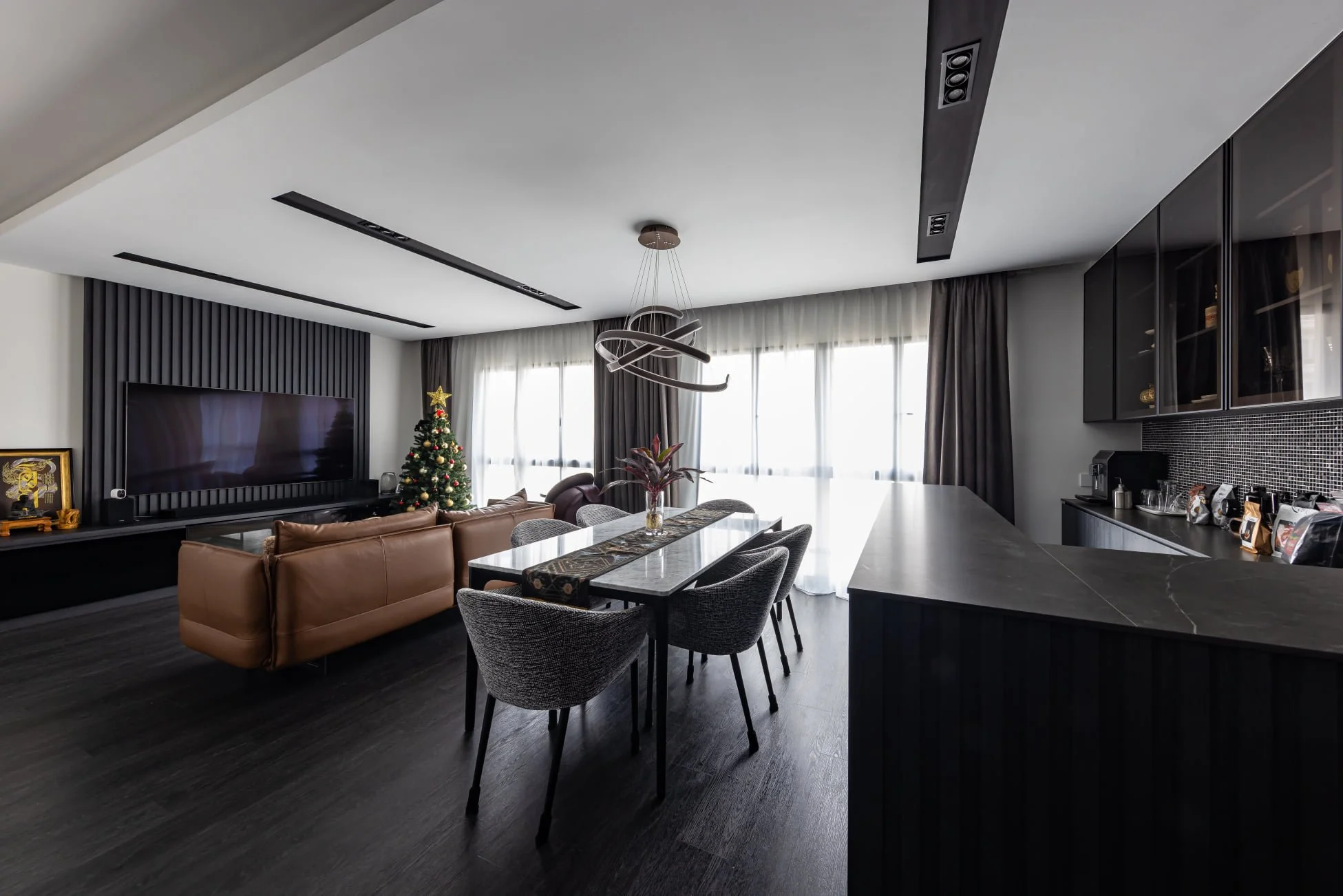
Use the picture of Woodsvale, 3-Bedder Condominium as an inspiration for your next renovation project.
4. Resort-Inspired Design
Singapore's condominium market includes many larger units and penthouses where a resort-inspired design direction is not just possible but actually appropriate. This style draws on the aesthetic of high-end Southeast Asian hotels: natural stone or stone-look surfaces, warm tropical timber, open bathroom layouts with freestanding tubs, and outdoor-influenced materials brought inside.
It's a high-investment, high-impact style that works best in developments with good views and natural light. In the right setting, it transforms a condo into something that feels genuinely distinctive.
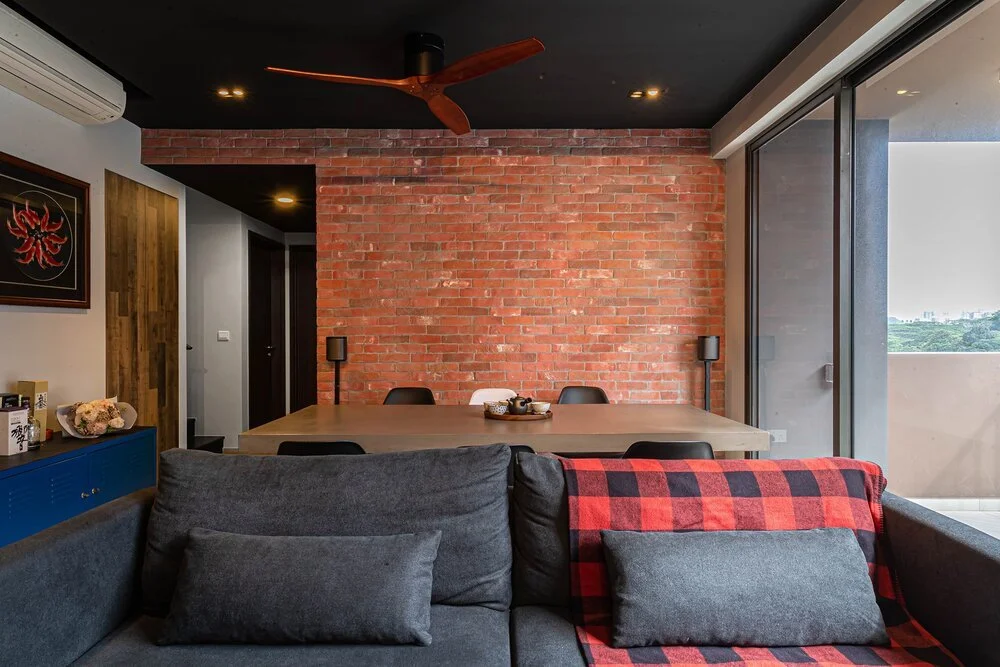
Inz Residences, 5-Bedder Maisonette Condo — a larger unit allows for resort-scale design moves that wouldn't work in a smaller space.
5. Eclectic Modern
Not every condo owner wants a defined style. Eclectic modern is the approach for homeowners who want a home that reflects personal taste and collected objects rather than a single coherent aesthetic direction.
Done well, eclectic modern condo design has a visual signature that's impossible to replicate — because it's genuinely personal. Done poorly, it reads as disorganised. The difference is usually whether there's a consistent underlying structure: a shared palette, a consistent flooring material, a lighting approach that ties the rooms together, even when the furniture and objects deliberately vary.

Lorong How Sun, 2-Bedder Condominium — personality in design is a virtue, provided there's an underlying structure to hold it together.
Real Condo Projects in Singapore
The Eden, 2-Bedder Condominium
A compact 2-bedroom unit designed to feel considerably larger than its floor plan. Storage integration, a mirror strategy that reflects natural light, and a palette that maintains visual continuity across all rooms. Have a look at the living space of The Eden as an inspiration:

Grandeur Park, 2-Bedder Condominium
A modern contemporary design for a 2-bedroom unit in the east — a good example of how considered material choices and lighting design can elevate a standard-sized unit substantially.
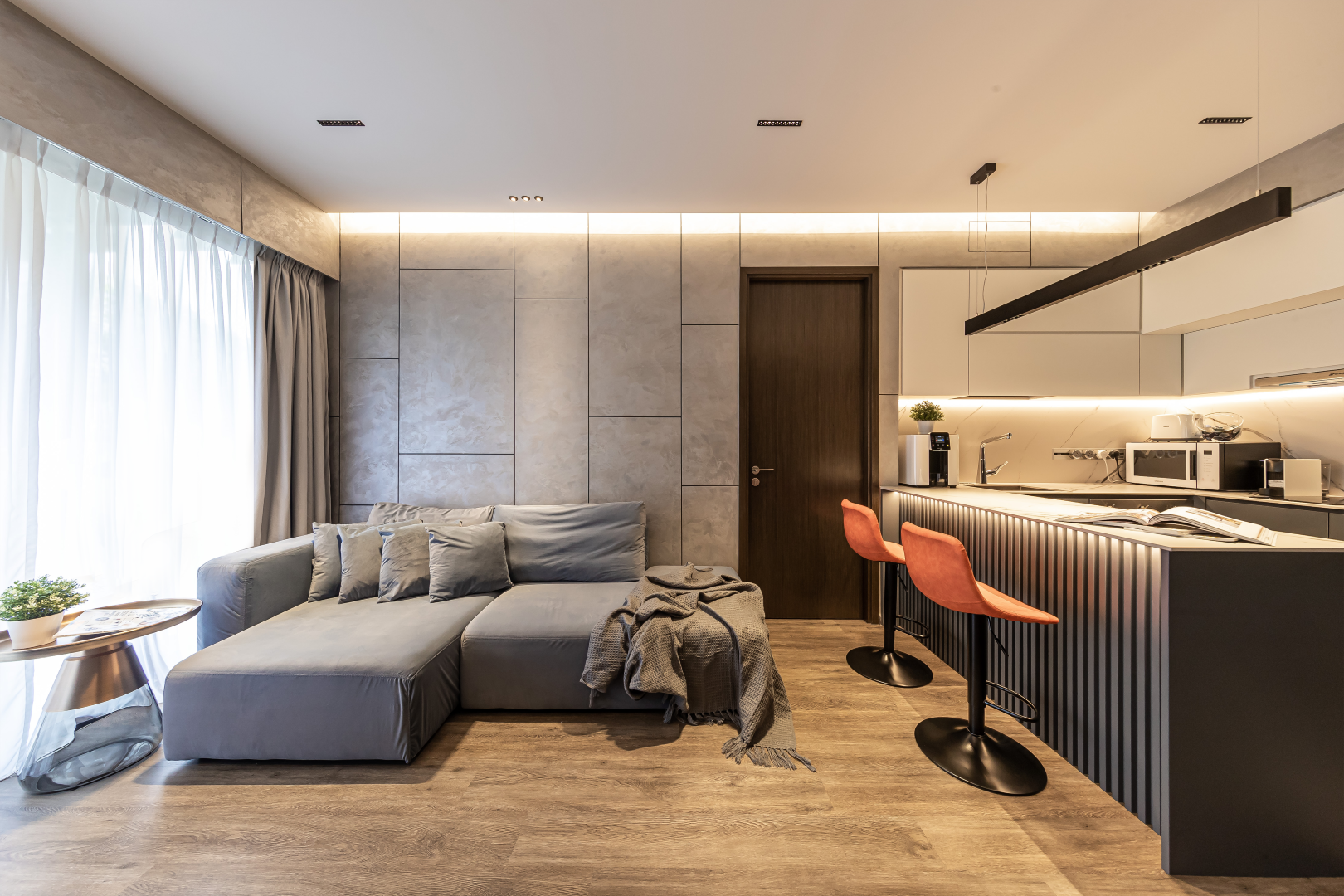
Grandeur park, 2 bedder condominium
Principal Garden, 2-Bedder Condominium
The kitchen is often the most important room in a small condo, and this project shows how a well-designed kitchen layout — with integrated appliances, a considered storage plan, and quality materials — transforms the entire unit. The kitchen we designed in The Principal Garden is a great example.
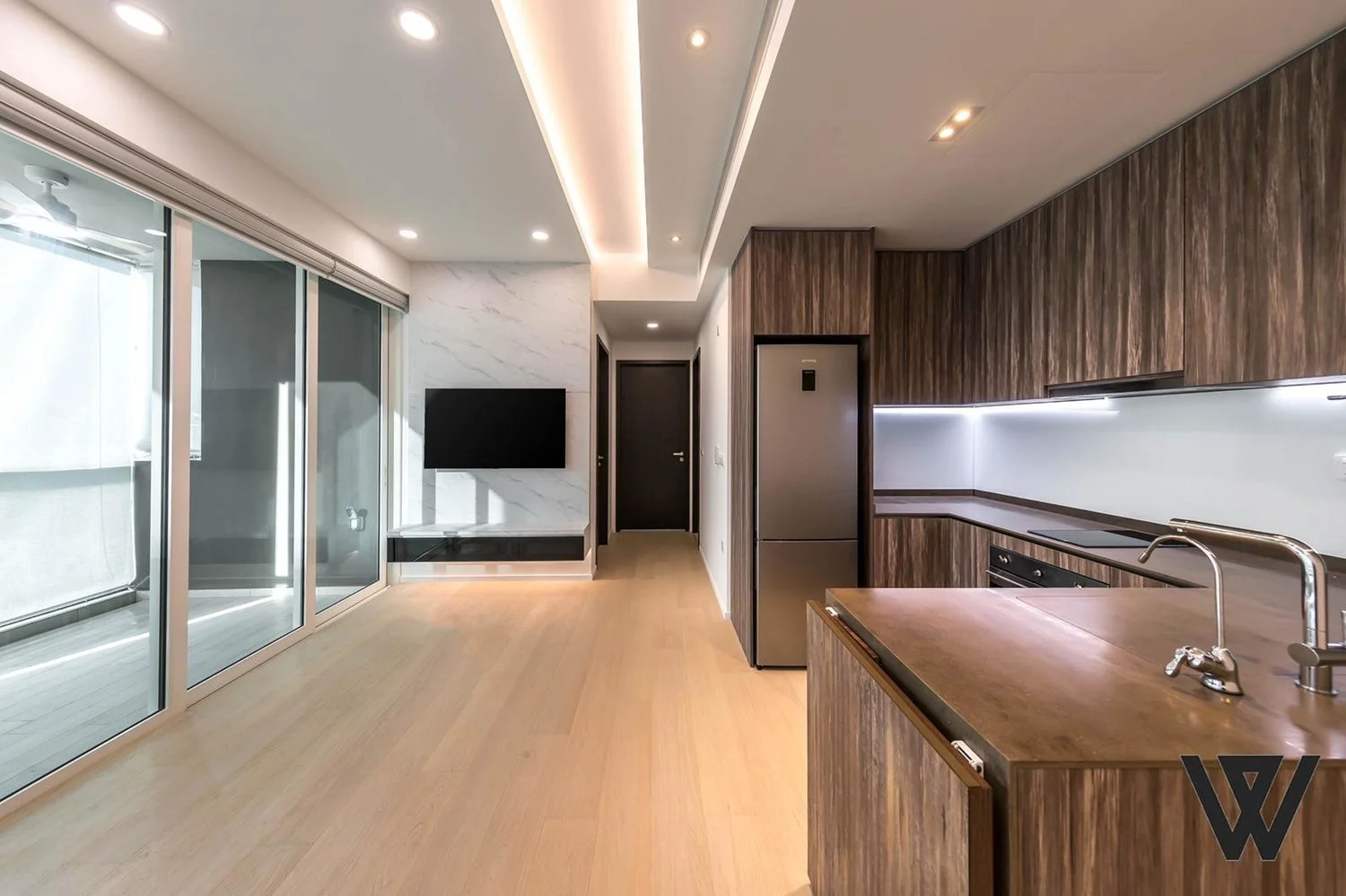
3-Bedder Artra Condominium
Alexandra Road location with a modern design that takes advantage of the unit's views. This project prioritised the living room and master bedroom as the primary design investment, with the rest of the unit designed consistently but without competing for attention. View project →

Inz Residences, 5-Bedder Maisonette Condominium
A larger maisonette unit where two floors and generous floor area allowed for design moves that wouldn't work in standard condos. Resort-inspired material choices (natural stone surfaces, tropical timber accents, an open bathroom layout with a freestanding tub) suit the scale and the maisonette format without feeling forced.

Inz Residences, 5-Bedder Maisonette Condominium — multi-level living that uses scale as a design opportunity, not just additional floor area.
Key Condo Design Principles That Work in 2026
Views are a design resource. If your condo has a good view, your interior design should draw attention toward it rather than competing with it. Furniture orientation, window treatment choices, and the balance between interior lighting and natural light all affect whether the view registers as an asset or gets visually crowded out.
Small condos don't need to feel small. A well-designed 2-bedroom condo can feel more spacious than a poorly designed 4-bedroom one. The tools are: consistent flooring throughout (no material breaks that chop the space), full-height carpentry with flush doors, mirrors positioned to reflect light, and furniture scaled correctly to the space — not oversized pieces that dominate the room.
The kitchen matters more in condos than in HDB flats. This sounds counterintuitive, but in a condo where the living room, dining room, and kitchen often share one open space, the kitchen is visible from everywhere. A well-designed open-plan kitchen elevates the entire unit; a compromised kitchen design anchors everything around it.
Lighting design is where condos differ most from HDB flats. Condo owners in 2026 are investing significantly more in proper lighting design — layered ambient, task, and accent lighting — than they were five years ago. The difference between a condo with good lighting and one with a single ceiling fitting in each room is substantial and immediately visible to anyone who walks in.
Common Condo Renovation Mistakes to Avoid
Even when condo renovations are effectively planned, they can go wrong in predictable ways. The seven most common mistakes and how to avoid each one include:
1. Treating the condo renovation like an HDB renovation. Condo renovation involves MCST approvals and different timelines, rules, and material expectations. So hire an interior designer who has experience in working with condos.
2. Underestimating MCST timelines. Plan for a longer timeline rather than a shorter one — particularly if your renovation involves structural changes, façade modifications, or work affecting common areas.
3. Skipping waterproofing because the developer's work looks fine. For resale condos older than 10 years, waterproofing should be assessed during renovation, regardless of how the existing fixtures look.
4. Not budgeting for service replacement in resale units. Older condo units often need rewiring, plumbing replacement, or aircon system upgrades. Budget 10-20% contingency for resale condo projects to cover these eventualities.
5. Buying furniture before final layout is confirmed. Wait until carpentry installation is complete before ordering large furniture items.
6. Choosing the cheapest quotation without scope comparison. Compare scope item-by-item before comparing totals.
How to Choose a Condo Interior Designer in Singapore
Choosing the right interior designer is the single most important decision in any condo renovation.
You must keep these six criteria in consideration when evaluating a condo interior designer in Singapore:
CaseTrust accreditation — Always verify accreditation through CASE directly rather than relying on the firm's claim.
MCST submission experience — Ask specifically how many MCST submissions the firm has handled in the past year and whether they've worked with your specific development before.
Condo portfolio depth — A designer who has completed 50+ condo projects will navigate condo-specific issues more confidently than one who works mostly on HDB flats.
Pricing transparency — Look for firms that offer transparent pricing quotes. Be cautious of firms that quote unusually low headline figures with vague scope descriptions.
Insurance and warranty terms — Verify the firm carries public liability insurance, and ask about post-renovation warranty terms.
Communication style — Ask to meet your assigned designer before signing because you will be working closely with them.
Ready to Design Your Condo?
If you’re planning a condo renovation, the next step is usually a layout consultation before any design work begins. Swiss Interior has completed condo renovation projects across Singapore — from compact 2-bedder units to larger 4-bedroom penthouses — with a consistent focus on design that works for how you actually live. We are CaseTrust accredited with over 13 years of experience and 3,000+ completed projects.
Condo Interior Design FAQs
How much does a condo renovation cost in Singapore in 2026?
A new 3-bedroom condo renovation in Singapore in 2026 typically costs between $32,000 and $68,500, depending on scope and materials. Resale 3-bedroom condos cost more — typically $60,000 to $84,000+ — because of infrastructure rectification work required before aesthetic work can begin.
Per square foot, standard condo renovation runs at $80–$120/sqft. Premium specification projects can go to $150–$200/sqft and above. Use Qanvast's Renovation Calculator for a quick personalised estimate.
Do I need MCST approval for condo renovation?
Most condo renovations require notification to the MCST and, for certain types of work, formal MCST approval. This includes structural changes, works affecting common areas (including the façade), and any work that might affect adjacent units (waterproofing, plumbing). Your interior designer should handle the MCST submission as part of the pre-renovation process.
What is included in a condo renovation scope?
A typical full-scope condo renovation includes: carpentry (kitchen, wardrobes, built-in storage), flooring, wet works (bathroom renovation, kitchen tiling), electrical works, painting, feature wall installation, lighting design and installation, and finishing touches. For resale condos, this often also includes hacking old finishes, plumbing replacement, and rewiring.
What condo interior design style is most popular in Singapore in 2026?
Contemporary luxury and modern minimalism are the most consistently requested styles at Swiss Interior for condo projects. Both suit the higher finishing standards that condo owners typically expect, and both age well, which matters in a higher-value property.
How long does a condo renovation take in Singapore?
Most condo renovations take 8–12 weeks from the start of work. This is similar to HDB timelines, but condo projects can sometimes run longer if MCST requirements add complexity or if the resale unit has significant rectification work.
Should I replace the developer's flooring?
This depends entirely on the developer's specification and your design direction. Some developer-installed flooring is excellent and worth keeping. Others are basic and worth replacing. Your interior designer should assess this early — it's one of the decisions that significantly affects both cost and design direction.
What's the difference between condo and HDB renovation costs?
For similarly sized units with a similar scope, condo and HDB renovation costs are broadly comparable. The main cost driver is always scope and materials, not property type. However, condo renovations often have higher finishing standards and material specifications than equivalent HDB projects, which pushes costs upward. Resale condo renovation can actually cost more than resale HDB renovation for the same size if the condo is in an older development requiring more infrastructure work.
Is condo renovation worth the investment in Singapore?
A typical condo renovation in Singapore in 2026 returns its investment in two ways: through immediate quality-of-life improvements that make the home enjoyable to live in daily, and through long-term value preservation.
Can I renovate a condo while still living in it?
Technically yes, but it depends on scope. Light renovations (painting, lighting upgrades, minor carpentry) can typically be managed around occupancy. Major renovations involving hacking, wet works, or significant carpentry installations almost always require homeowners to move out for 4-8 weeks.
What's the typical timeline for a condo renovation in Singapore?
A new condo renovation typically takes 8-10 weeks from start of works to handover. Resale condo renovations with significant rectification can take up to 10-14 weeks.
What is MCST approval, and how long does it take?
MCST (Management Corporation Strata Title) approval is the renovation permission process administered by your condo's management committee. Most MCSTs respond within 2-4 weeks, though some take longer for complex renovations or during peak periods.
Do I need contents insurance during condo renovation?
Yes, it is recommended. Your interior designer's insurance covers their work but not your existing belongings, structural damage to neighbouring units caused by renovation, or third-party liability beyond their policy limits.