
Home Renovation Singapore: A Real-World Guide From Planning to Moving In
If you’ve been anywhere near PropertyGuru or a resale launch lately, you’ve probably noticed the same uncomfortable truth I have: many people seem to be renovating, and far too much of it is being done badly.
That bothers me. Probably more than it should.
I’ve seen people spend six figures and still end up with homes that feel vaguely disappointing — not because they lacked money, but because the thinking was sloppy. Decisions were rushed. Contractors cut corners. No one stopped to ask whether something actually made sense.
This guide is for anyone about to dive into a renovation without a roadmap. We’ll cover the big stuff, such as budgets, home renovation loan, permits, and contractors, and the small stuff no one talks about: dust, delays, arguments over handles, and the quiet panic that comes when something just doesn’t fit.
By the end, you’ll have a clearer sense of what to expect, how to avoid common mistakes, and how to actually end up with a home that feels like yours.

Royal Green, 3 Bedder Condominium
Planning Your Home Renovation in Singapore
Before you talk to any contractor, before you even start saving Pinterest photos, you kind of have to be honest with yourself. About three things, really: your space, your money, and what you can actually live with once the novelty wears off.
I’ve seen people fall in love with HDB home renovation ideas that looked amazing on a screen and felt completely wrong in real life. One client insisted on an all-white kitchen because it looked “so clean” online. Two months later, every fingerprint showed. Tomato sauce, coffee splashes, you name it. That’s the kind of thing no one tells you.
HDB renovations are their own special puzzle. You’re boxed in by fixed layouts, pipes you’re not allowed to touch, and neighbours who can hear everything. You can’t just bulldoze your way to a good design. You have to think around constraints.
Condos and landed homes give you more freedom, but honestly, that sometimes makes things worse. Too many options, too many bad decisions, too much money spent on things no one really needs.
What Everyone Seems to Be Doing Right Now
If you’ve looked at enough Singapore homes lately, you start seeing the same patterns.
Minimalist homes are everywhere. Clean lines, fewer built-ins, lots of empty space. When it’s done well, it feels calm. When it’s done badly, it feels like no one finished the job. I’m still not sure which happens more often.
Space-saving designs, like hidden storage, fold-down desks, and walls that open up, make a lot of sense in HDB flats. But some of them are so clever that they become annoying. If you have to fight a cabinet every time you want a plate, something went wrong.
Then there’s the Japanese-inspired look. Warm wood, soft lighting, low furniture, shoji screens. A lot of younger homeowners seem drawn to it because it feels quiet. Like you can actually relax there. That may be why it’s sticking around longer than most trends.
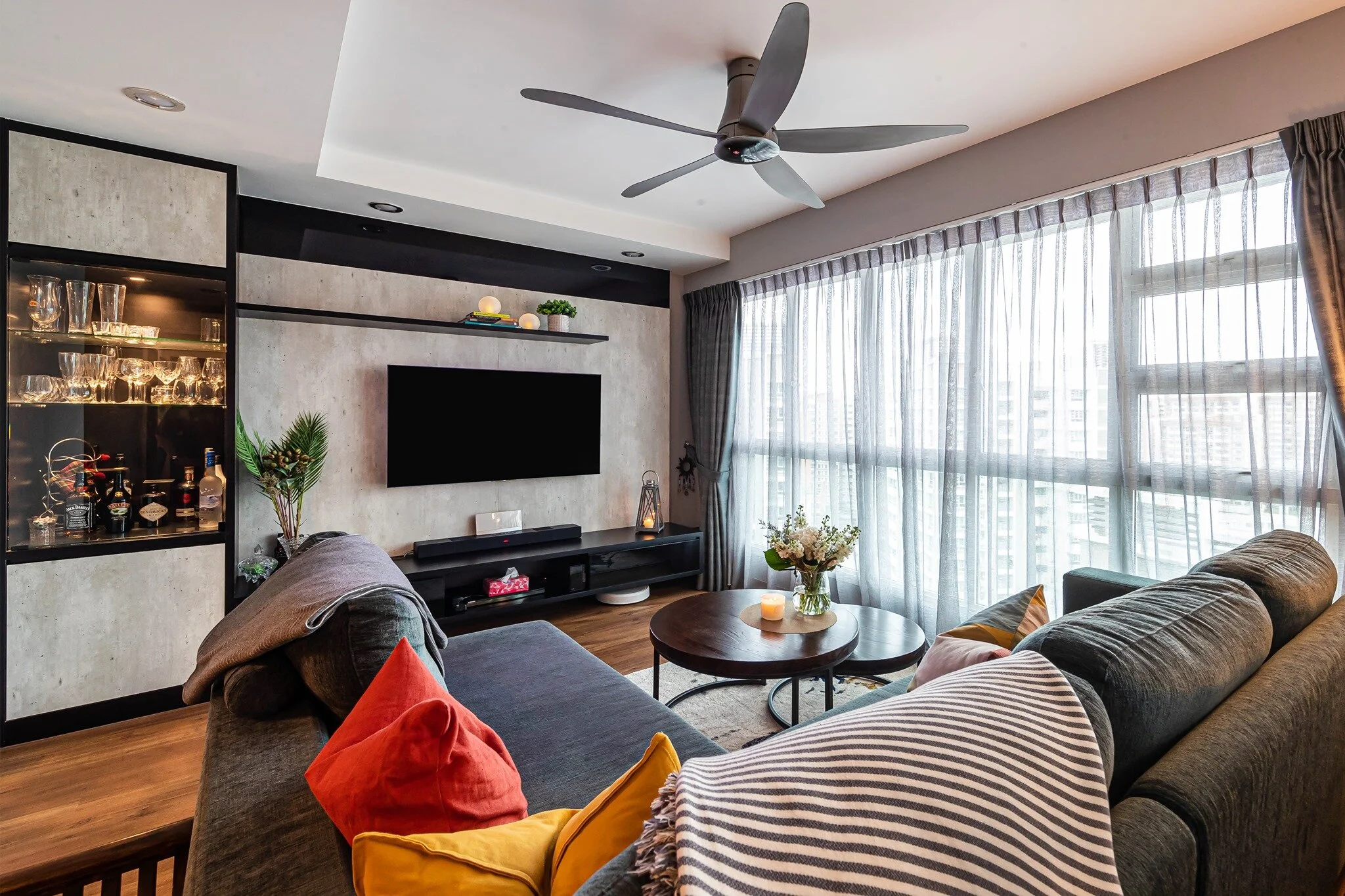
607A Edgefield Plains 4Room Resale Flat
Renovating a New BTO, Like in Clementi or Tengah
New flats come with their own kind of stress. You’ve got defects to fix, timelines to juggle, and rules that don’t care how excited you are to move in.
You’ll need HDB-approved contractors. Sometimes you’ll need a Qualified Person to submit drawings. And you have to wait for certain things before you even start. Rush this part, and you may end up ripping out things you just paid for. I’ve seen it happen. It’s painful in a very specific, very expensive way.
A Few Things to Check Before You Commit
This part matters.
Do you actually need HDB permits for what you want to do?
Have you told your neighbours? (It sounds small, but it can save you a lot of trouble.)
Are the materials you picked going to survive Singapore’s humidity, or are they just pretty under showroom lights?
And please use mood boards and 3D design tools. They let you see what won’t work before it becomes real. Which, trust me, is when mistakes get really expensive.
I don’t mind getting things wrong. That’s how you improve. But getting things wrong because no one thought it through? That one still stings.
Choosing a Home Renovation Contractor in Singapore
Not all home renovation services are the same, even though many of them look identical online. Seriously, I’ve seen three different companies, same stock images, same smiling families, same vague promises about “quality workmanship,” and yet two of them would have ruined your kitchen in a week if you were not careful.
So, what are you actually dealing with? Usually, three types of players.
First, the full home renovation company. They design, they build. Convenient, yes. But sometimes convenience comes with a cost: they might push designs that are easier to build rather than what actually works for you.
Then there are the pure contractors. They’re there to actually build stuff. Some are brilliant. Some are good at showing up on time, and that’s it. You really have to dig.
And finally, the freelance designers who outsource everything. They may have excellent taste, but when the plumbing fails or the cabinets don’t fit, good luck getting them on the phone.
Here’s a tip from experience: don’t just rely on Google reviews. They’re easy to fake. Check CaseTrust. Check HDB’s Red-White-Shield list. Go to HomeRenoGuru and actually read the complaints — you’ll learn more from what went wrong than what went right.
Red Flags You Should Take Seriously
Some red flags are obvious. If a quote is ridiculously cheaper than everyone else, it probably is. They’re cutting corners somewhere. If they don’t have a real portfolio, I mean, actual photos of completed homes, not renders, that’s another warning.
If timelines are vague, they’re probably planning to be late. And if anyone says, “Don’t worry, no need permit,” just don’t. That sentence has wrecked more kitchens than bad cabinets ever could.
Here’s the thing: good home renovation contractors in Singapore don’t promise miracles. They promise clarity. They tell you what’s possible, what’s realistic, and what’s going to hurt if you ignore it. And honestly, that’s rare. Really rare.
Design and Preparation Phase
This is the stage where your HDB home renovation ideas start to actually exist. Or fail spectacularly. Depending on how much thought you put in.
If you’re into Japanese-inspired home renovation Singapore design, such as shoji-style dividers, little tatami reading corners, warm wood, and natural textures, this is where it either starts to feel like home or like a hotel set.
Honestly, I’ve seen both. One friend built a tatami nook in a three-room HDB and loved it for a week until he realised there was no proper storage, and now it’s just a soft landing for laundry.
At the same time, the reality check arrives. HDB rules. No structural hacking. QP submissions. Approvals for nearly everything. Some people treat this as bureaucracy to ignore. Big mistake. Trust me. Ignoring rules here is expensive and stressful. There’s no clever workaround, not without risk.
My advice? Take your time. Sketch it. Measure it. Mock it up if you can. Maybe even fail a little on paper before you ever touch a wall. That’s the only kind of failure that matters, the kind that teaches you, rather than costing you.

Blk 308C Punggol Waterway 5 rm HDB Resale
Execution: From Demolition to Installation
This is where it gets real. Noisy, dusty, messy. Emotional too, if you care about your home, which, I hope, you do.
There’s a rough order to things. Hacking first — walls come down, tiles get smashed. Then electrical and plumbing. Then ceilings, walls, carpentry, painting, and finally, fixtures. That’s the logical sequence.
Good home renovation services Singapore do not leave you guessing. Daily updates, photos, and messages about progress or problems – that is everything. It may feel excessive at first, but when something goes wrong, you’re glad for the transparency. It’s also the only way to catch sloppy work before it’s permanent.
And yes, neighbours will complain. Of course, they will. The drilling, the dust, the timing. It matters more than people think.
The key is patience. Pay attention to the sequence. Insist on updates. Don’t let anyone cut corners. The difference between a home that feels finished and a home that feels broken often is not the design. It’s how carefully it was built.
Final Stages: Completion and Handover
Finally, the noisy, dusty, stressful part is mostly over. Now it’s time to see if everything actually works. And honestly, that part always makes one nervous.
Before you pay the last bill, check a few important things. Make a defect list: look at every corner, every handle, every door. One of my friends missed a small cabinet hinge, and months later, it still annoyed her. Small mistakes matter more than you think.
Test the waterproofing in bathrooms and kitchens. A tiny leak might not show right away, but it can cause a lot of damage if you ignore it.
Check all the finishes, including paint, tiles, and cabinets. Even small, uneven edges can make the whole space feel sloppy.
After that, get the professional cleaning done, collect warranties, and finally, move in. That first walk through your home should feel right. Not “good enough,” not “almost there,” but exactly as it should be.
And if it is not? Don’t panic. Failure isn’t a disaster; it’s a tool. You notice it, you fix it, you make it better. That is how homes become homes that actually feel perfect, rather than just exist.
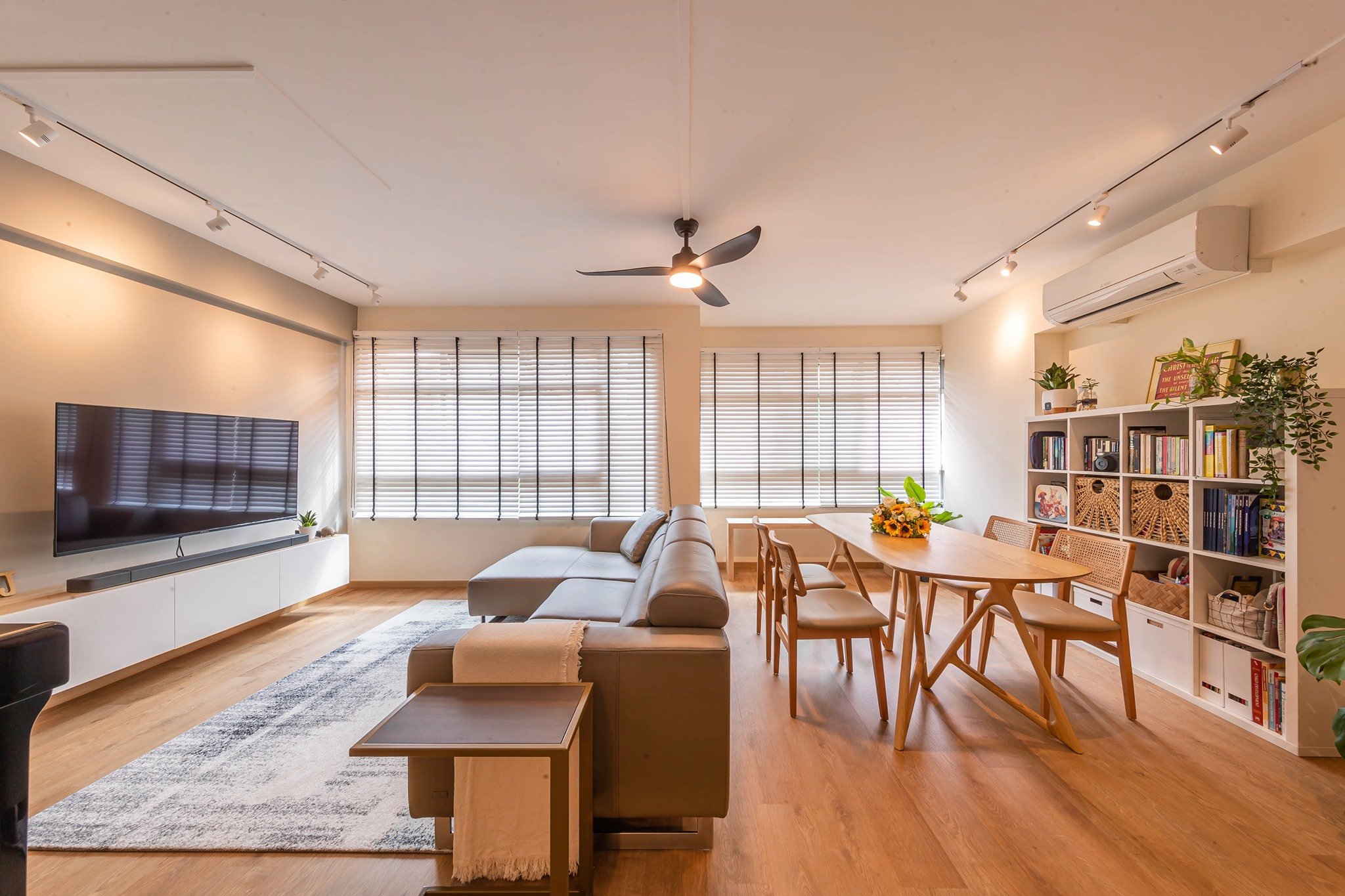
BLK 273D Compassvale Link HDB Resale 4Room
The Bottom Line
Renovating a home in Singapore is messy, expensive, and sometimes exhausting. But it does not have to be disappointing. Most of the problems I see, like mismatched finishes, poorly thought-out layouts, and regret over rushed decisions, are not because people lack money or taste. They’re because no one slowed down long enough to think.
If you plan carefully, understand the rules, pick the right HDB home renovation services, and pay attention to the details, you can avoid the mistakes most homeowners make.
Sketch it, measure it, test it, and check it twice. Communicate. Insist on clarity. And don’t be afraid to fail on paper before anything goes permanent — that’s the only failure worth having.
Swiss Interior is dedicated to helping you design a home that captures your essence. Specialising in HDB interior design in Singapore and condominium interior design, we focus on everything from 4-room layouts to innovative small-space solutions. Our interior designers in Singapore offer insights into creating inviting atmospheres, maximizing functionality, and enhancing the overall aesthetic of your living space. Let’s embark on this renovation journey together, ensuring your home is a true reflection of your style.